
Chapter 1
Embracing the Winding Roads
8-minute read · 1684 words
“The road does not ask your permission before it curves.”
One moment, you are moving in a straight line. The destination seems clear. Your confidence is steady. You know what you are building, where you are headed, and what you expect the next few miles to hold.
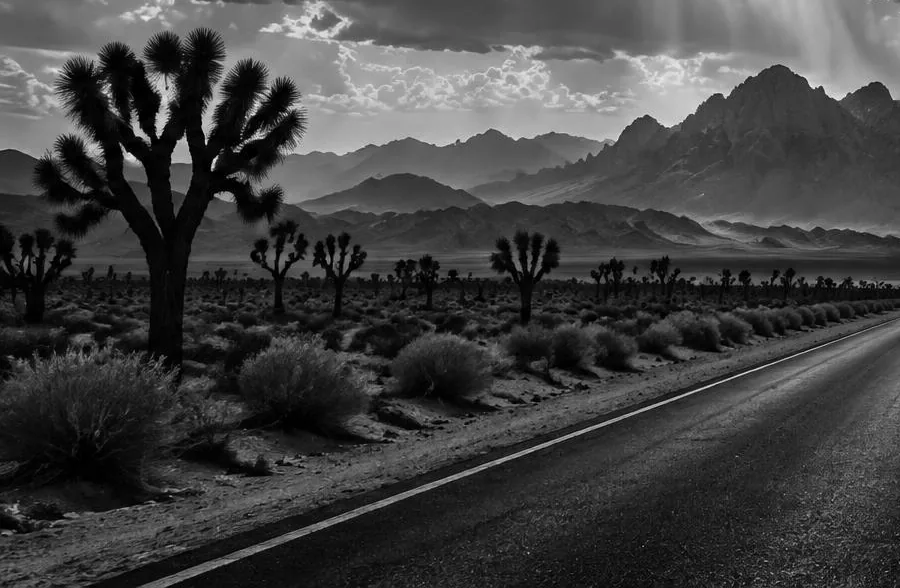
Then the road bends.
A plan changes. A relationship shifts. A job ends. A door closes. Your health, finances, faith, or sense of identity suddenly feels less secure than it did yesterday. The view ahead narrows, and the route you had been following no longer looks familiar.
When that happens, it is natural to tighten your grip.
We want to stop at the curve until life returns to the route we expected. We want an explanation before we move forward. We want God to straighten the road, remove the uncertainty, and show us exactly where the bend is leading.
But the road may not straighten on our timetable.
The question is not whether we will encounter unexpected turns. We will. The question is what we will do when they come.
Will we let the curve convince us that we are lost? Or will we learn to travel it with greater trust, attention, humility, and courage?
The bend is often where the deeper journey begins.
When the Road Changes
Life’s winding roads do not all look the same.
Some are beautiful. They lead us into seasons of growth, opportunity, renewed purpose, and unexpected joy. In those moments, gratitude comes easily. The road feels wide. The weather is clear. We can see enough of the horizon to believe we are exactly where we are supposed to be.
Other roads are difficult.
They include the disappointment you did not expect, the unanswered prayer, the season of financial pressure, the quiet loneliness inside a crowded room, the loss that rearranges your life, or the decision that leaves you unsure whether you chose well.
Those roads can make us question everything.
When the road becomes difficult, we may assume something has gone wrong. We may interpret hardship as evidence that we missed God, failed spiritually, or made an irreversible mistake.
But difficulty does not automatically mean abandonment. Scripture does not promise an effortless road. It tells a more honest story: people of faith encounter wilderness, waiting, loss, uncertainty, opposition, grief, and long seasons in which the next step is not obvious. Yet God remains present with them. He gives wisdom, strength, correction, companionship, and grace for the road they are actually walking—not merely the one they wish they had been given (Psalm 23:4; Isaiah 43:2; James 1:2–5).
This does not mean every painful event has a simple explanation. It does not mean we should call harm good, minimize grief, or remain in unsafe situations. Faith does not require pretending that abuse, injustice, betrayal, illness, or loss are easy to understand.
Sometimes the faithful response is to grieve. Sometimes it is to ask for help. Sometimes it is to establish a boundary, speak the truth, leave what is unsafe, seek professional care, or invite trusted people to walk with you.
God’s presence does not remove the need for wisdom.
But even on roads we would never have chosen, we are not beyond His care.
What the Curve Can Reveal
A curve changes what you can see.
On a straight road, it is easy to imagine that you are fully in control. You can see the distance ahead. You can estimate the arrival time. You can convince yourself that your preparation, discipline, and determination are enough.
The curve interrupts that illusion.
It reveals how much of life was always beyond your control. It brings fears to the surface. It exposes the places where self-sufficiency became an identity, where success became a substitute for peace, or where certainty became more important than trust.
That kind of revelation can feel uncomfortable. But it can also become an invitation.
The apostle Paul wrote of discovering God’s strength in the place of human weakness—not because weakness is desirable in itself, but because it can strip away the illusion that we are meant to carry life alone (2 Corinthians 12:9–10).
A difficult season may reveal that you need rest.
It may reveal that you have been carrying grief you never gave yourself permission to name.
It may reveal that your identity has become too attached to performance, achievement, approval, or control.
It may reveal that a relationship, habit, or ambition has been steering your heart in a direction you were too busy to notice.
The curve is not always an answer. But it can become an honest mirror.
If we are willing to pause, we may discover that the question is not only, “How do I get back to the road I planned?” It may also be, “What is this moment showing me about how I have been traveling?”
Presence in the Present Mile
One of the great temptations of any journey is to live somewhere other than where we are.
We live in the future, imagining the moment when the uncertainty will finally end. We rehearse conversations that have not happened. We calculate outcomes. We measure the miles remaining. Or we live in the past, replaying the turn we wish we had not taken and wondering whether we could have prevented everything that followed.
Meanwhile, the present mile passes unnoticed.
We miss the conversation in front of us because we are preparing for the one we hope to have later. We miss the kindness offered today because we are still grieving the kindness we did not receive yesterday. We miss the quiet evidence of God’s care because we are scanning the horizon for a larger sign.
Jesus taught His followers not to carry tomorrow’s worries before tomorrow arrives (Matthew 6:34). That is not a call to irresponsibility or denial. It is an invitation to return to the place where grace is actually available: the present moment.
The present mile may be ordinary. It may be difficult. It may not look like progress.
But it is still where your life is happening.
It is where you can pray honestly. It is where you can make one healthy decision. It is where you can answer the phone, take the walk, have the conversation, ask for counsel, set the boundary, complete the task, or rest when your body and soul need rest.
Presence is not passive.
It is the daily decision to receive the life in front of you rather than postponing your entire life until the road becomes easier.
The People Who Travel With Us
No one was meant to travel every difficult mile alone.
Some people enter our lives briefly. They offer encouragement at the moment we most need it. They ask a question that clarifies something we had been avoiding. They extend a kindness that restores our faith in people when we had begun to close ourselves off.
Others walk beside us over long stretches of the road. They become mentors, friends, pastors, counselors, family members, or fellow travelers who help us remember who we are when hardship makes us forget.
Community does not eliminate the curve. But it can keep the curve from becoming a place of isolation.
Scripture repeatedly frames spiritual growth as something that happens in relationship. We are called to encourage one another, bear one another’s burdens, speak truth in love, and remain connected to a community that strengthens faith and character (Galatians 6:2; Hebrews 10:24–25; Ephesians 4:15).
Not every voice deserves equal access to your heart.
Seek people who are both honest and kind. Look for those who can sit with your pain without making it smaller, challenge you without shaming you, and encourage you without simply telling you what you want to hear.
And when you can, become that kind of traveler for someone else.
You do not need perfect answers to offer presence. You do not need to fix another person’s road to walk beside them with compassion.
Sometimes the most faithful thing we can say is, “I do not fully understand what you are carrying, but you do not have to carry it alone.”
Becoming the Traveler
The winding roads are not interruptions to your life.
They are part of your life.
They shape how you see, how you listen, how you love, and how you depend on God. They reveal the difference between who you thought you were and who you are becoming. They teach us that a meaningful life is not measured only by how quickly we arrive, but by the kind of person we become along the way.
This does not mean every curve will make sense. It does not mean you must be grateful for every loss, call every hardship a blessing, or force a redemptive lesson before you are ready. There are seasons that call for lament before they call for language of growth. There are wounds that require healing before they can become part of a testimony.
Still, God can meet you on the road as it is.
He can give you strength for a mile you did not think you could walk. He can bring wise people near you. He can expose what needs to change and restore what you thought was permanently broken. He can lead you one step at a time when the whole route remains hidden.
The road does not ask your permission before it curves.
But you can choose how you will travel the curve.
You can choose honesty over denial.
You can choose presence over panic.
You can choose wise counsel over isolation.
You can choose faithfulness in the next step, even before you understand where the road is leading.
You may not be able to control the road.
But with God’s help, you can become a wiser, steadier, more compassionate traveler on it.
Reflect
Reflective Questions
- What unexpected curve are you currently facing, or what curve have you recently walked through?
- When life does not follow the plan you expected, what is your first response: fear, control, withdrawal, blame, prayer, action, or something else?
- What has a difficult season revealed about your needs, fears, values, identity, or relationship with God?
- Where are you most tempted to miss the present mile because your attention is fixed on a future destination or a past regret?
- Who are the honest and kind people you can invite into your current season?
- What is one practical, faithful step you can take this week, even if the full road remains unclear?
Practice for the Road
Create a one-page “curve check” in your journal.
- What has changed?
- What am I feeling honestly?
- What is within my responsibility today?
- Who can I ask to walk with me?
End with this sentence:
God, I cannot see the entire road, but help me take the next faithful step.
Return to the page at the end of the week. Notice what has shifted, what still needs care, and what support you may need to seek.
Prayer for the Road
Lord, teach me to travel the road I am actually on. When life curves without warning, steady me. Keep me from calling pain good or forcing an explanation before it is time. Give me permission to grieve what has been lost, wisdom to seek practical help, and eyes to recognize the grace that is still present. Form compassion, humility, and courage in me as I move through this mile. I do not need the whole road today. Give me what I need for the next faithful step. Amen.
Continue reading in the full book.